
MSME vs Startup India Registration: Which One Do You Need?
A comprehensive comparison between Udyam (MSME) and DPIIT (Startup India) registration to help you decide which one aligns with your business goals.
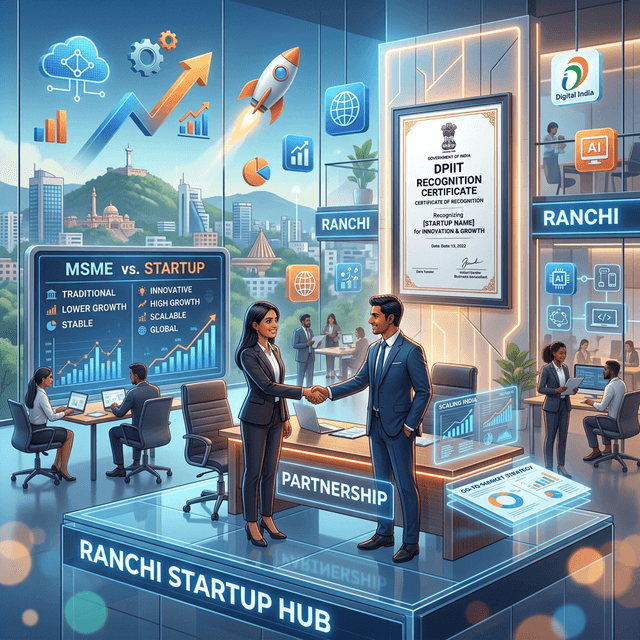
MSME vs. Startup India Registration: A Strategic 2026 Comparison
The Indian business landscape is more diverse than ever. With millions of new businesses launching every year, the government has introduced various frameworks to support this growth. The two most prominent ones are **MSME (Udyam) Registration** and **Startup India (DPIIT) Recognition**. While they might sound like interchangeable terms for "small business registration," they are fundamentally different tools designed for different stages and types of entrepreneurship.
In 2026, where digital compliance and fiscal prudence are paramount, choosing the right registration (or both) can define your business's financial trajectory. This guide provides a definitive comparison of **MSME vs. Startup India**, exploring the legal nuances, tax implications, and strategic advantages of each path.
1. Defining the Philosophical Divide
To understand which one you need, you first need to understand whom they are for:
- MSME (Micro, Small, and Medium Enterprises): This is a horizontal classification. It applies to *every* business that falls within the investment and turnover limits, regardless of what they do. Whether you're a textile manufacturer, a courier service, or a boutique café, you are an MSME. The focus here is on protecting and incentivizing "traditional" businesses that form the backbone of the economy.
- Startup India (DPIIT): This is a vertical, specialized classification. It is designed for businesses that are working towards innovation, development, or improvement of products or processes. A startup must have a high potential for employment generation or wealth creation. Every 'startup' is technically an MSME, but not every MSME is a 'startup'.
2. Eligibility: The Battle of Numbers vs. Ideas
MSME Thresholds (2026)
- Micro: Investment < ₹1 Cr & Turnover < ₹5 Cr
- Small: Investment < ₹10 Cr & Turnover < ₹50 Cr
- Medium: Investment < ₹50 Cr & Turnover < ₹250 Cr
Startup India Limits
- Age: Entity must be < 10 years old.
- Turnover: Must be < ₹100 Cr in any year.
- Ineligible: Formed by splitting an old business.
3. Benefits Analysis: Fiscal vs. Operational
The "why" behind these registrations is where the decision is made. Let's break down the exclusive perks of each.
Exclusive MSME Benefits:
- Priority Sector Lending: Banks are mandated by the RBI to allocate a portion of their lending to MSMEs. This often means lower interest rates and collateral-free loans up to ₹2 Crores.
- Delayed Payment Protection: If a buyer delays payment beyond 45 days, you can file a case with the MSME Facilitation Council, and the buyer is liable to pay compound interest at 3x the RBI bank rate.
- ISO Certification Reimbursement: The government often reimburses the costs incurred for obtaining ISO certificates.
- Electricity Subsidy: Many states offer reduced power tariffs to businesses with a valid Udyam registration.
Exclusive Startup India Perks:
- Section 80-IAC (Income Tax Holiday): The most powerful benefit. Eligible startups get 100% tax exemption for 3 consecutive years. This is critical for scaling when your burn rate is high.
- Angel Tax Exemption (Section 56(2)(viib)): Protects you from taxation on premiums received from investors. This is often an investor's number one requirement before signing a term sheet.
- Self-Certification: Startups can self-certify compliance for 6 labor laws and 3 environmental laws for up to 5 years, meaning no "inspector raj."
- SIDBI Fund of Funds: Access to a ₹10,000 Cr corpus that invests in VCs who then invest in startups.
4. Comparative Case Study: The Local Bakery vs. The Food-Tech App
Imagine two entrepreneurs in Ranchi. **Aman** opens a bakery using high-quality local ingredients and traditional recipes. **Sneha** builds a mobile app that uses AI to predict bakery demand and connects local bakers to a dark-store distribution network.
**Aman's Path:** He should apply for **MSME (Udyam) Registration**. His bakery isn't trying to disrupt a global market; it's a stable, local business. With Udyam, he gets a ₹50 Lakh collateral-free loan to buy ovens and a 10% discount on his commercial electricity bill.
**Sneha's Path:** She should apply for **Startup India Recognition**. Her business is tech-driven and highly scalable. With DPIIT recognition, she gets an 80% discount on her patent for the AI algorithm, and she secures the Angel Tax exemption which allows a Mumbai-based VC to invest ₹2 Crores without tax hurdles.
5. The "Dual Track" Strategy: Why You Should Register for Both
In 2026, the most successful tech-entrepreneurs follow a dual-track strategy. They register for MSME immediately because it is free and instantaneous. This gives them immediate status and protection against late payments. Simultaneously, they apply for Startup India recognition to build their long-term growth and funding foundation.
There is no legal bar to having both. In fact, they complement each other perfectly. Your MSME status handles the operational security, while your Startup India status handles the strategic scaling.
Conclusion: Making the Choice
If your business model is about stability, traditional production, or local service, **MSME Registration** is your destination. If your model is about innovation, technology, and rapid national/global growth, **Startup India Recognition** is your path.
At Startup India Experts, we specialize in helping founders navigate both. Whether you need an airtight innovation pitch for the DPIIT or a seamless Udyam registration for a bank loan, we are here to ensure your compliance is your biggest strength.
Unsure Which One Fits Your Business?
Get a free 15-minute consultation with our compliance experts. We will analyze your entity type and business model to recommend the perfect registration strategy.
Need Expert Guidance?
Don't risk your timeline with guesswork. Let Startup India Experts handle your entire DPIIT Recognition process flawlessly.
Start Registration